

In June, 65 PhD students from across Australia submitted single-page synopses in a bid to win a $10,000 award. Their projects had to be related to cell or biological therapies – and had to demonstrate commercial potential.
Announcing the AusHealth CureCell Award Winners for 2025!
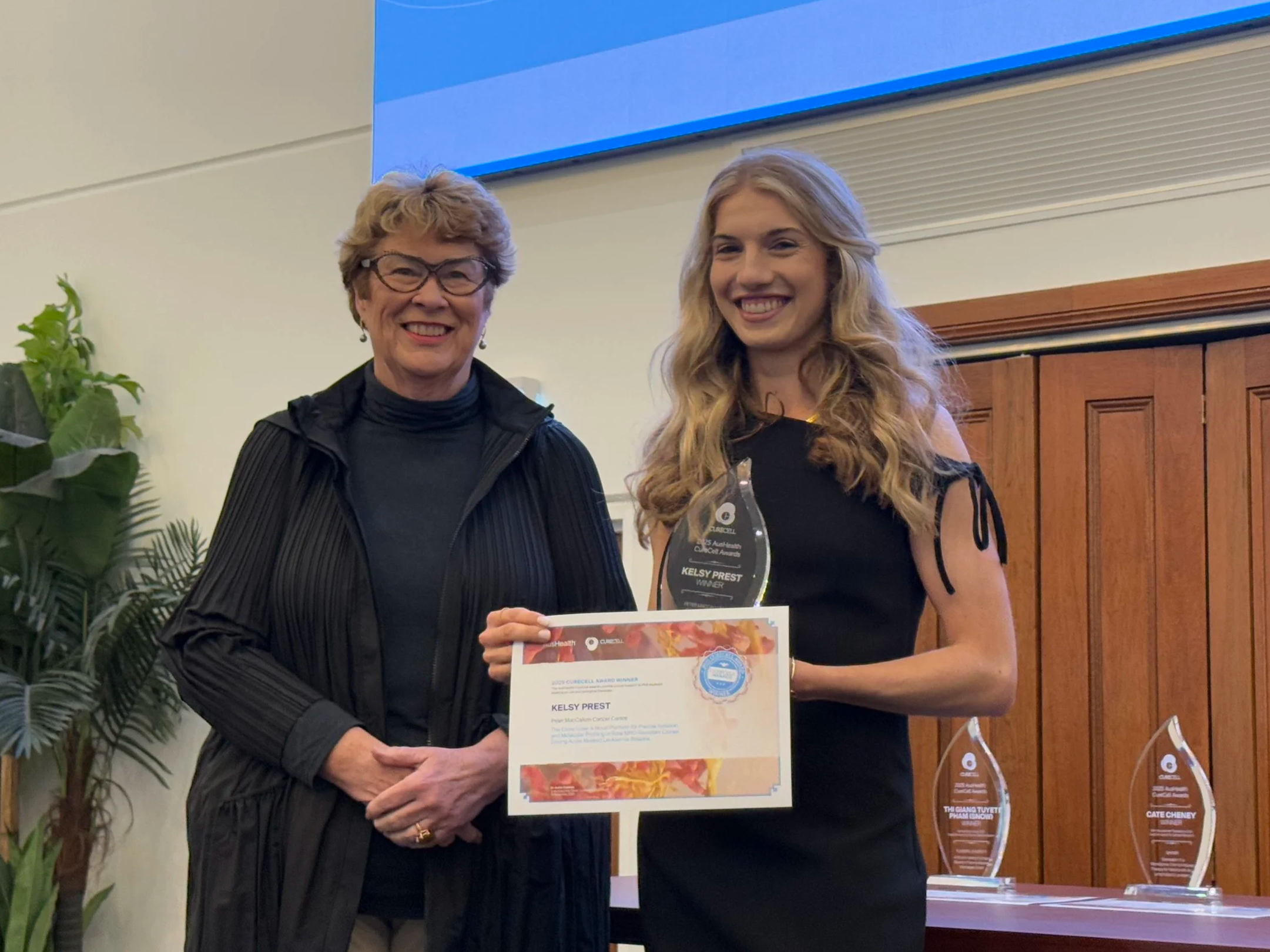
AusHealth CEO Dr Justin Coombs is delighted to announce the winners of the 2025 AusHealth CureCell Awards.
This year, seven PhD students from leading Australian universities and research institutes each receive $10,000 to support their living expenses as they pursue breakthrough research in medical science.
The 2025 winners are:
Matt van der Burg (The University of Queensland): FLVCR2 as a novel gateway for brain therapeutics and glioblastoma treatment
Cate Cheney (SAHMRI), receiving the Pan Macedonian Federation of SA CureCell Award: Generation of a microbiome-oriented adjuvant therapy for patients with acute lymphoblastic leukemia
Julia L. Leeflang (University of Adelaide): Engineering next-generation colorectal cancer treatments
Giáng Tuyết Phạm (Flinders University), receiving the Marine Bioproducts CRC CureCell Award for Marine Medical Biotech: A wound healing hydrogel based on plasma-assisted microalgae extract
Matteo Pitteri (The Florey Institute): Unlocking brain-penetrating antisense therapies for neurological diseases
Kelsy Prest (Peter MacCallum Cancer Centre): The clone claw: A novel platform for precise isolation and molecular profiling of rare MRD-resistant clones driving AML relapse
Lachlan Staker (University of Adelaide) receiving the SMART CRC CureCell Award: Dual action gene editing strategy for treating dominant negative or toxic-gain of function mutations
Entries for the 2025 Awards close to doubled from last year, with 65 PhD students applying from 13 national institutions across five states. The standard of submissions was exceptionally high, making the awards process highly competitive.
According to Justin, “The Awards are only in their second year, so we’re thrilled with the number of applications and inspired by the range and depth of submissions. And it's terrific to see so many universities and research institutions being represented.”
Justin says it's important to support Australia’s next generation of researchers: “People don’t realise how little money Australian PhD researchers get by on. These cash prizes are intended to relieve financial pressures – and I’m delighted to have fellow co-sponsors who appreciate that we need to lend this extra support.”